- AI Business Insights
- Posts
- Your Research Just Grew Legs
Your Research Just Grew Legs
NotebookLM: Autonomous Research and Design
NotebookLM has evolved from a passive study buddy into an active research agent and creative studio, reshaping how you work with information.
Google has integrated agentic workflows and advanced visual models directly into the platform. You no longer need to bring your own data to get value, and you do not have to read through walls of text to understand it. The tool can now run autonomous deep research to build a notebook from scratch and then turn that knowledge into visual assets like infographics and slide decks.
In partnership with

Shoppers are adding to cart for the holidays

Over the next year, Roku predicts that 100% of the streaming audience will see ads. For growth marketers in 2026, CTV will remain an important “safe space” as AI creates widespread disruption in the search and social channels. Plus, easier access to self-serve CTV ad buying tools and targeting options will lead to a surge in locally-targeted streaming campaigns.
Read our guide to find out why growth marketers should make sure CTV is part of their 2026 media mix.
*Ad
The Era of Autonomous Research and Visualization
This update targets two core problems: gathering credible sources and turning them into something presentable. Previously, NotebookLM was only as good as the PDFs or sites you uploaded.
With Deep Research (powered by Gemini), the tool acts as an autonomous agent. It plans, searches the web, analyzes results, and iterates to fill in missing information. In a demo on “The path to AGI,” it produced a detailed report and automatically imported the top 20 high-quality sources into the notebook as references, turning a blank page into a sourced research library in minutes.
Deep Research is an Agent, Not a Search Bar
Deep Research goes beyond typical “fast research” tools. When you give it a topic, the AI pauses to plan its approach before pulling in sources. In the alignment example, it found dozens of potential sources, then filtered down to the 20 most relevant and credible. There is also a button to remove all failed sources at once, so you do not have to clean up broken links manually.
Once the sources are imported, the tool generates a synthesis report, creating a loop where it finds, vets, and learns from the data. This is ideal when you are starting a new topic without a set of documents.
The Visual Suite (Infographics and Slide Decks)
The update adds a pro-level visual model (“Nano Banana Pro” in the transcript) that generates infographics and slide decks from your grounded sources. The author requested an infographic on the AGI timeline.
You can choose Concise, Standard, or Detailed. Standard offered the best balance of clarity and structure, while Detailed can introduce typos when it tries to fit in too much text. A practical tip is to hit Edit before generating so you can adjust focus or style, including color palettes.
The Slide Deck feature creates multi-slide presentations with charts. A 15-slide deck included a complex AI performance graph that placed data points correctly on the axes, saving hours for teachers, students, and consultants who need quick draft decks based on a report.
AI-native CRM

“When I first opened Attio, I instantly got the feeling this was the next generation of CRM.”
— Margaret Shen, Head of GTM at Modal
Attio is the AI-native CRM for modern teams. With automatic enrichment, call intelligence, AI agents, flexible workflows and more, Attio works for any business and only takes minutes to set up.
Join industry leaders like Granola, Taskrabbit, Flatfile and more.
*Ad
Other awesome AI guides you may enjoy

The “Trust but Verify” Prompting Strategy
Because NotebookLM relies on sources, the main risk becomes source bias. To counter this, the expert shared three prompts he uses to validate every notebook:
“Identify any areas my sources disagree on and any contradictions between them.”
“Identify gaps in my sources. What is missing that would be necessary to understand the topic fully?”
“Are there any contrarian, alternative, or lesser-known viewpoints that are not covered in these sources?”
These prompts surface conflicts, gaps, and missing perspectives so you can stress-test your information library.
Why This Matters
These updates point toward AI tools that cover the full knowledge lifecycle. You can start with a vague idea, have the AI build and check a research library, then export the results as a slide deck or infographic in one session.
If you want to see the specific visual styles (including a very cool “Retro 80s” video overview), check out the full video.
Six resources. One skill you'll use forever
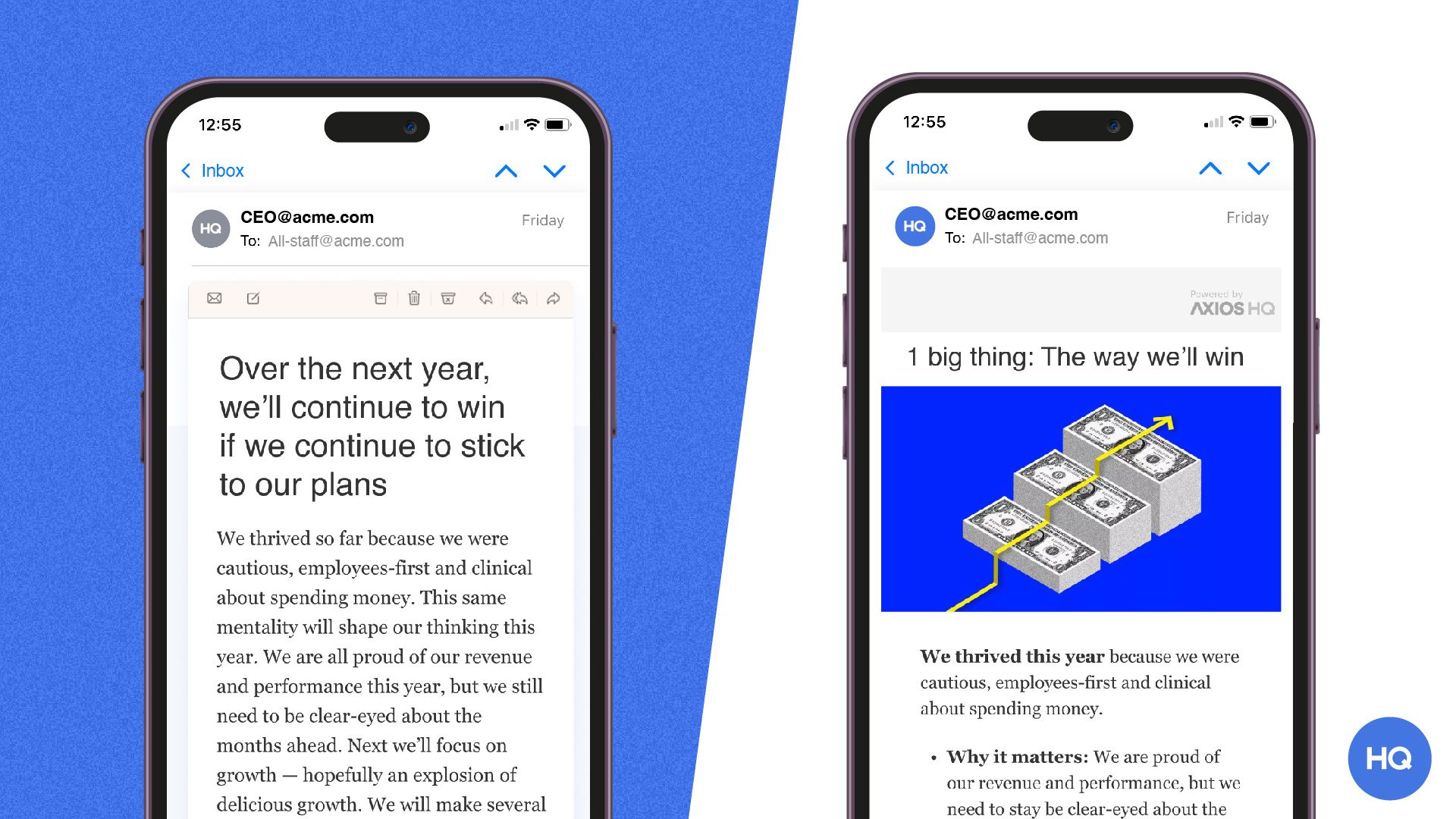
Smart Brevity is the methodology behind Axios — designed to make every message memorable, clear, and impossible to ignore. Our free toolkit includes the checklist, workbooks, and frameworks to start using it today.
*Ad