- AI Business Insights
- Posts
- Save $200k on Strategy
Save $200k on Strategy
Claude AI for Competitive Intelligence
In partnership with

I used to think “competitive intelligence” meant pricey reports, mystery meetings, and people who talked in circles. Then I watched this talented AI creator show a faster, cleaner way that felt almost unfair. It hit me that companies leak their future plans every day, and they do it voluntarily. Not in press releases, but in job listings. And when you pair those listings with the company’s own SEC filings, the story gets loud. If you’ve only used AI for emails or code, this will stretch your imagination in the best way.
You can replicate a strategic consulting-style briefing worth six figures in minutes using only public data. The method I saw from this AI professional turns job posts into a competitive intelligence engine, not by guessing, but by proving. The big idea is simple: companies cannot hide what they are building because they have to hire people to build it. If you know what they are hiring for, you can reverse-engineer what they are about to launch.
Better prompts. Better AI output.
AI gets smarter when your input is complete. Wispr Flow helps you think out loud and capture full context by voice, then turns that speech into a clean, structured prompt you can paste into ChatGPT, Claude, or any assistant. No more chopping up thoughts into typed paragraphs. Preserve constraints, examples, edge cases, and tone by speaking them once. The result is faster iteration, more precise outputs, and less time re-prompting. Try Wispr Flow for AI or see a 30-second demo.
The Power of Competitive Intelligence
This is not “ask a chatbot what your rival is doing.” It is evidence-first analysis. The creator’s point is that hiring is operational truth, and SEC filings are the official narrative. When you put both into a high-reasoning model, you can spot the gap between what a company says and what it is actually investing in.
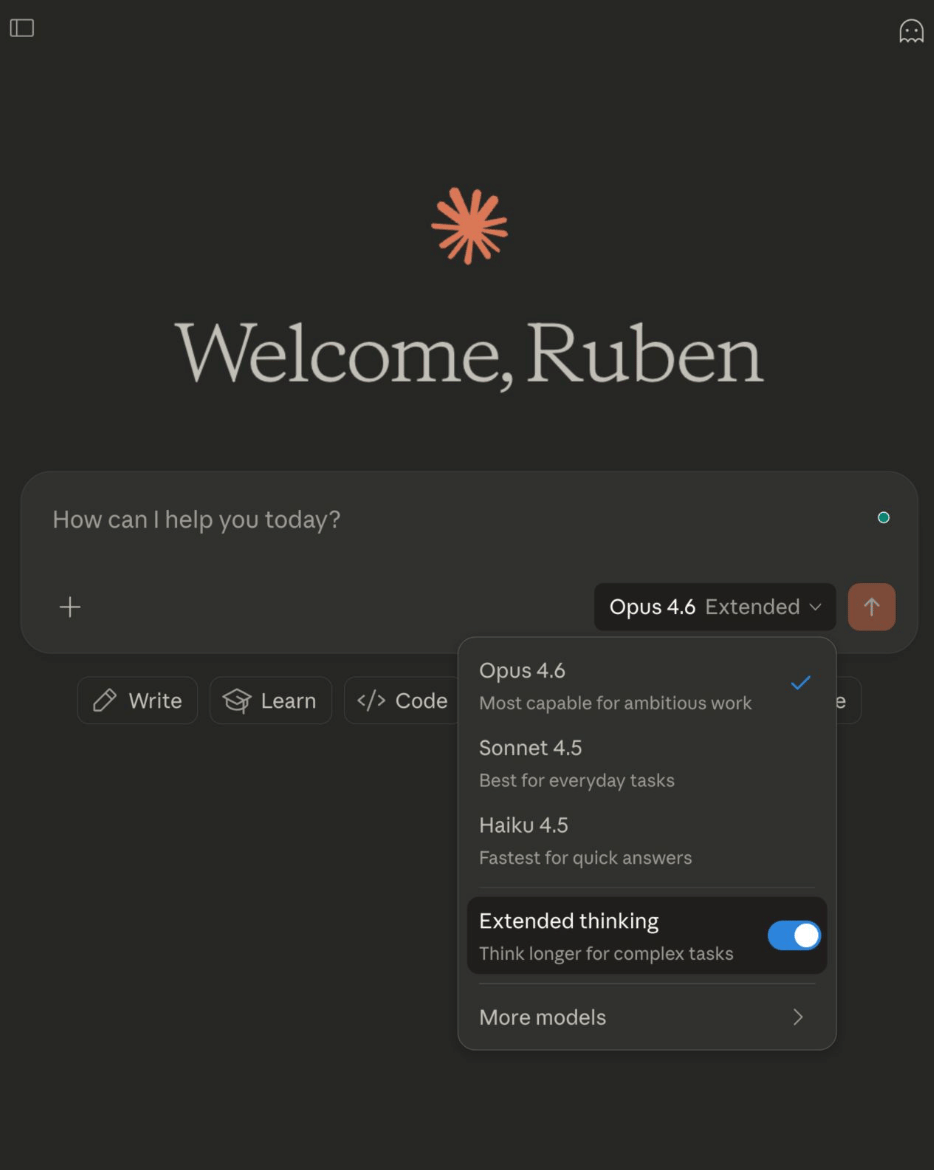
Reading job descriptions one by one is slow and messy. Humans miss patterns, and we get biased fast. The original post argues that this is exactly where a strong model like Claude, specifically the version they call Opus 4.6 with Extended Thinking, earns its keep. You need a big context window and the ability to connect dots across lots of text without losing the thread.
The Two-Step Data Harvest
Step one is the operational reality. Go to the competitor’s careers page and copy every open role into one document. Include titles, team names, locations, and full descriptions, because tiny details often matter most.
Step two is the strategic narrative. Download the company’s most recent 10-K or 10-Q from the SEC EDGAR database and save it as text or a Word file. Now you have a “control group” that shows what they publicly claim, plus the hiring data that shows what they are funding right now.
The “Analyst” Prompt
The clever part is not just summarizing. The creator frames the AI as a competitive intelligence analyst, so the output stays sharp, skeptical, and structured. The prompt hunts for signals that are easy to miss when you are skimming.
Here is the exact prompt provided by the creator:
“You are a competitive intelligence analyst at a rival company. I’ve uploaded [Company]’s complete current job listings and their most recent SEC filing.
Perform a strategic intelligence analysis:
Cluster these roles by what they suggest is being built. Don’t use the team names they’ve listed. Infer the actual product initiatives from the skills, tools, and responsibilities described.
Identify capabilities or teams that appear entirely new — not mentioned anywhere in the SEC filing. These are unreleased bets.
Find roles where seniority is disproportionately high for a new team. This signals executive-level priority.
Cross-reference the SEC filing’s Risk Factors and Strategy sections with hiring patterns. Where are they investing against a stated risk? Where did they flag a risk but have zero hiring to address it?
Predict 3 product launches or strategic moves this company will make in the next 6-12 months. State your confidence level and cite specific job titles and filing sections as evidence.
Format this as a 1-page competitive intelligence briefing for a CMO.”
Learn how to make AI work for you

AI won’t take your job, but a person using AI might. That’s why 2,000,000+ professionals read The Rundown AI – the free newsletter that keeps you updated on the latest AI news and teaches you how to use it in just 5 minutes a day.
*Ad
Other awesome AI guides you may enjoy
The Crystal Ball Effect
If you do this well, it feels like a legal crystal ball. You can spot products that do not exist yet but probably will in six to twelve months. That time advantage is everything, because it lets you prepare positioning, partnerships, pricing, or a counter-move before the announcement hits.
It also exposes contradictions. A CEO can talk about “efficiency” while hiring aggressively in a low-margin area. Or a “strategic pillar” can show up in the annual report with almost no headcount behind it, which often means it is performative or deprioritized.
Potential Challenges
This workflow is only as good as your inputs. If job listings are copied poorly or jumbled, the model can invent connections that are not real. And the original post is clear that model quality matters: weaker models tend to produce generic summaries instead of tight, evidence-linked insights. Treat data collection like a lab experiment and you will get much cleaner signals.
This is a brilliant way to leverage AI for high-value strategic work.
Credits to Ruben Hassid