- AI Business Insights
- Posts
- Pre-mortem your project before it kills itself
Pre-mortem your project before it kills itself
Oof, this hit hard
Most project plans are quietly optimistic. They map out milestones, assign owners, set deadlines, and completely ignore the voice in the back of your head whispering “but what if this all goes sideways?”
That’s the gap this prompt fills. The author, u/Glass-War-2768, shared a sharp one-liner in r/PromptEngineering that turns your AI into a brutally honest critic before you’ve spent a single dollar on execution.
In partnership with

Speak your prompts. Get better outputs.
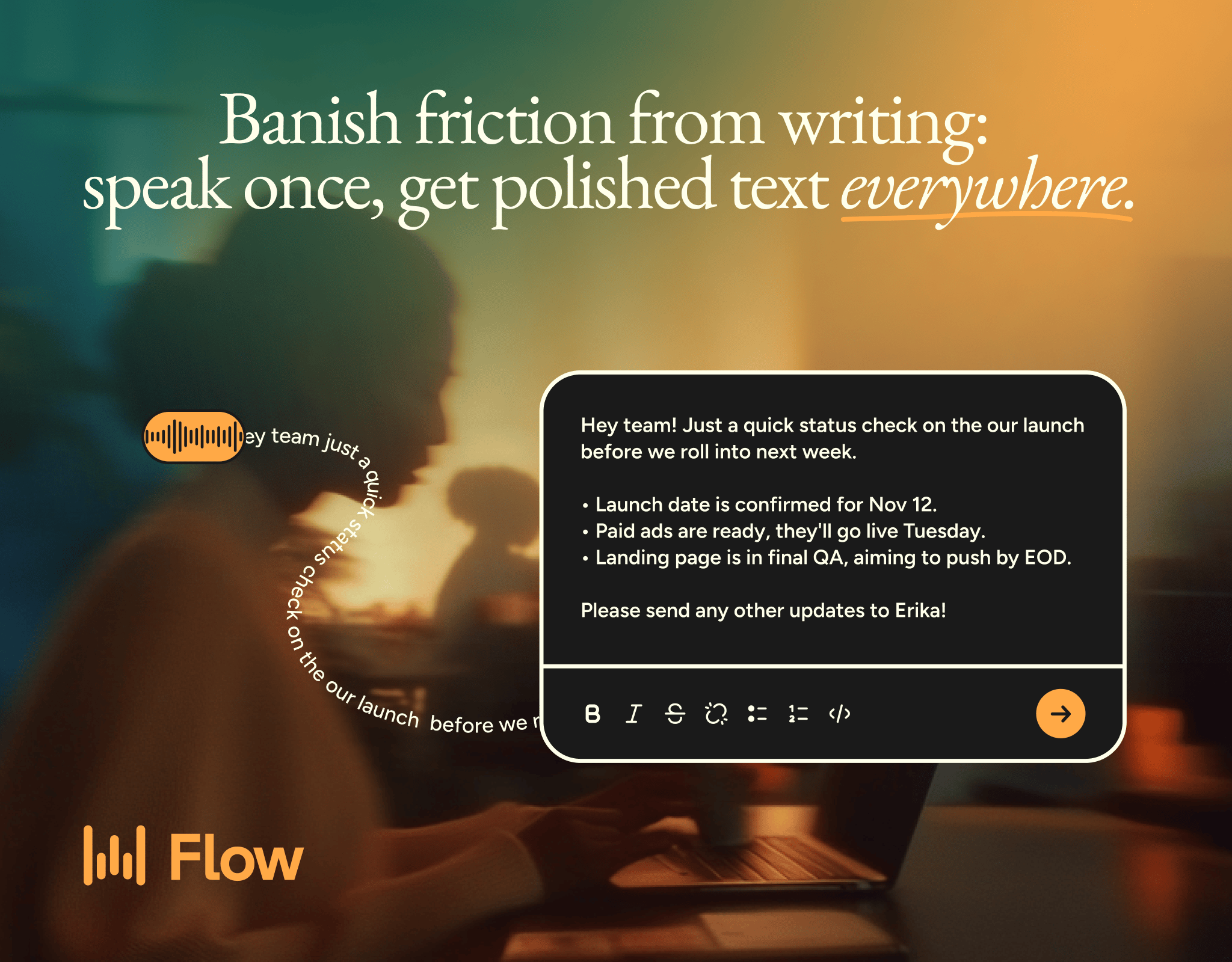
The best AI outputs come from detailed prompts. But typing long, context-rich prompts is slow - so most people don't bother.
Wispr Flow turns your voice into clean, ready-to-paste text. Speak naturally into ChatGPT, Claude, Cursor, or any AI tool and get polished output without editing. Describe edge cases, explain context, walk through your thinking - all at the speed you talk.
Millions of people use Flow to give AI tools 10x more context in half the time. 89% of messages sent with zero edits.
Works system-wide on Mac, Windows, iPhone, and now Android (free and unlimited on Android during launch).
The Prompt (copy this exactly)
“Here is my project plan. Imagine it is 6 months from now and the project has failed. List the 3 most likely reasons why it failed and how to prevent them today.”
That’s it. Paste your plan after this instruction and let the AI do the uncomfortable thinking you’ve been avoiding.
Why it works
This technique borrows directly from a well-established decision-making method called a pre-mortem, a concept popularized by psychologist Gary Klein. Instead of asking “will this succeed?”, you assume failure and work backwards. It’s cognitively very different, and that difference matters.
Here’s what makes each piece of this prompt pull its weight:
“Imagine it is 6 months from now”: temporal anchoring. It forces the AI (and you) out of present-tense optimism and into a concrete hypothetical future.
“The project has failed”: assumption of failure. This unlocks critical reasoning the AI might otherwise suppress when trying to be “helpful.”
“3 most likely reasons”: a hard constraint that prevents vague, exhaustive risk lists. You get the top threats, not a 40-point spreadsheet.
“How to prevent them today”: action orientation. The output isn’t doom; it’s a to-do list.
The community pushback from u/VorionLightbringer, who points to risk matrices, is fair. But a formal risk matrix takes hours to build and requires a team. This prompt takes 30 seconds and works solo. They’re complementary, not competing.
How Jennifer Aniston’s LolaVie brand grew sales 40% with CTV ads

The DTC beauty category is crowded. To break through, Jennifer Aniston’s brand LolaVie, worked with Roku Ads Manager to easily set up, test, and optimize CTV ad creatives. The campaign helped drive a big lift in sales and customer growth, helping LolaVie break through in the crowded beauty category.
*Ad
Use Cases
Freelancers scoping a new client project and worried about scope creep
Startup founders stress-testing a product launch timeline
Team leads pressure-checking a quarterly roadmap before presenting to leadership
Solopreneurs launching a course, cohort, or service and second-guessing the plan
Two variations worth trying
Variation 1: Stakeholder lens
“Here is my project plan. Imagine it is 6 months from now and a key stakeholder has pulled their support. What did they see coming that we missed, and what should we change now?”
This shifts the frame from internal execution failure to external relationship failure, often the real killer on complex projects.
Variation 2: Scale the timeline
Swap “6 months” for whatever matches your project’s horizon. A 2-week sprint? Use “3 weeks from now.” A 2-year product build? Try “18 months from now.” The temporal anchor should feel slightly beyond completion, not so far it’s abstract.
Head over to the original r/PromptEngineering thread to see the full discussion, including the debate about whether this replaces or just shortcuts traditional risk management. Both sides make points worth reading.