- AI Business Insights
- Posts
- Intern Beats Expert Using Smarter AI Tools
Intern Beats Expert Using Smarter AI Tools
Specialized AI Speeds Workflows
Efficiency often comes down to the tools you choose rather than just raw experience. I was truly surprised when I read a story about an intern who completed a task in two hours that took a senior expert two full days.
The original poster explained that the discrepancy wasn’t due to skill, but because the expert was using “novice” generalist tools while the intern leveraged specialized, “expert-level” applications.

*Ad
A great night out shouldn’t wreck tomorrow. For founders and operators who protect their time, small optimizations matter. ZBiotics Pre-Alcohol is the first genetically engineered probiotic designed to break down the toxic byproduct of alcohol - what leads to rough mornings. Drink it first, drink responsibly, and wake up sharper. Get 15% off at zbiotics.com/aib with code AIB.
The Power of Specialization
The core mechanism driving this efficiency gap is the difference between general-purpose Large Language Models (LLMs) and purpose-built AI applications. General tools like standard chatbots are Swiss Army knives; they can do everything decently but rarely do one thing perfectly without extensive prompting. The author points out that by switching to tools designed for specific workflows, like presentation building or deep data analysis, you remove the friction of formatting and prompt engineering. The intern won because they didn’t try to force a chatbot to be a graphic designer; they simply used a design tool powered by AI.
The Tool Upgrade Path
This LinkedIn creator provides a fantastic roadmap for upgrading your software stack to match specific tasks. For presentation creation, the suggestion is to move away from text-based prompts in Gemini and utilize Gamma, which builds visual decks instantly. for data analysis, the author recommends swapping standard ChatGPT for Rows, a tool that integrates AI logic directly into spreadsheets. Even for LinkedIn growth and content, the move is from generic drafting to Taplio. It is a clear reminder that using the right tool for the job is the quickest way to level up your output.
The Vetting Workflow
How do you actually find these “expert” tools before they go mainstream? The expert outlines a rigorous discovery and testing process. It starts by monitoring launchpads like Product Hunt, Reddit, and X/Twitter for new releases. However, the crucial step this savvy professional emphasizes is validation. You must look for reviews from other builders and, most importantly, personally test the tool. If a tool doesn’t demonstrably accelerate your specific workflow in the long term, it shouldn’t make the cut.
Other awesome AI guides you may enjoy
Operational Guardrails
Speed is useless if it compromises security or accuracy. The post’s author lists critical “Do’s and Don’ts” that separate amateurs from pros. The most significant rule is data privacy: never enter sensitive, confidential, or regulated data into these systems. Furthermore, keeping a human in the loop is non-negotiable. While the novice might trust the output blindly, the expert verifies every fact to prevent hallucinations. Ethical use and avoiding bias are just as important as the speed of execution.
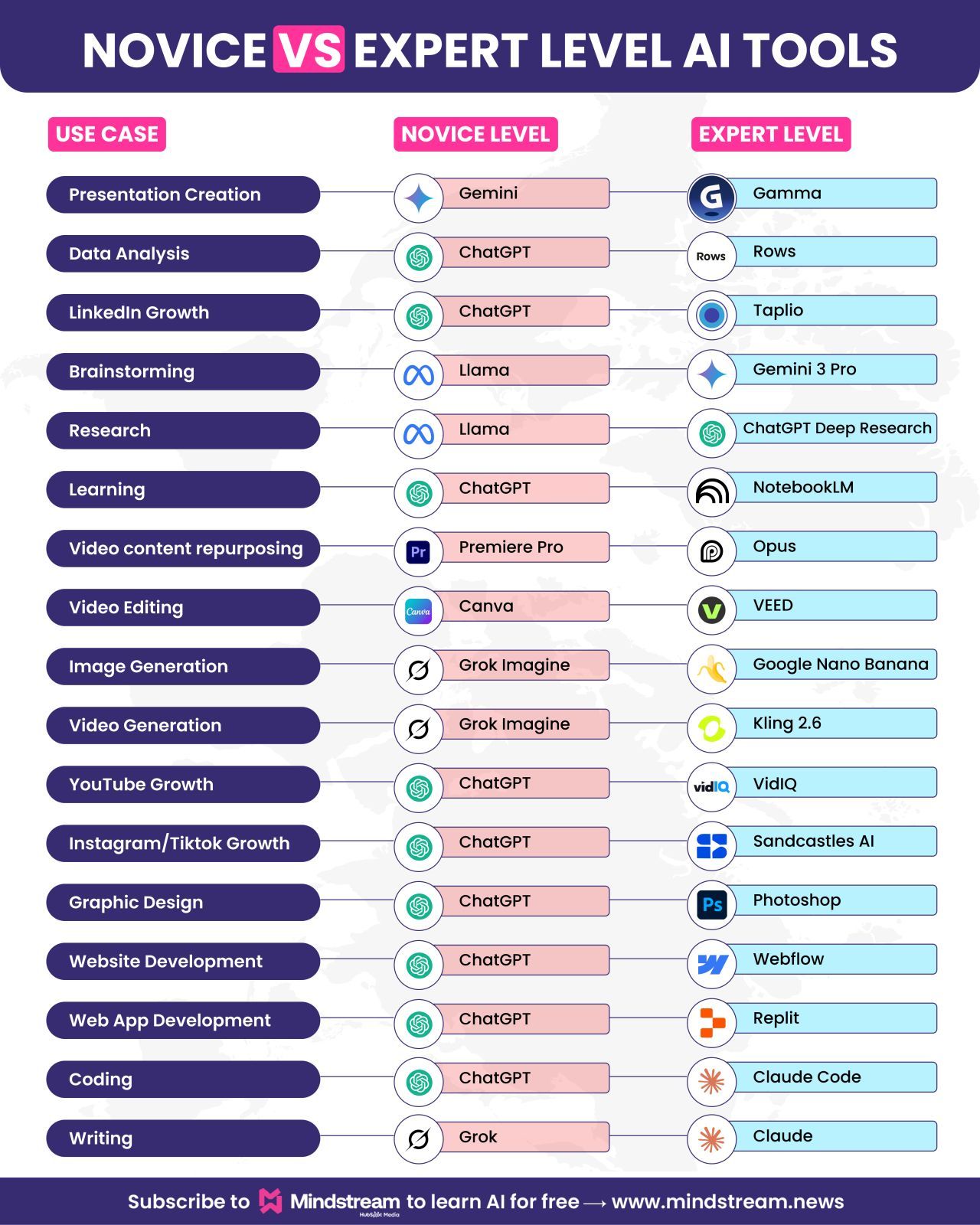
Credits to Adam Biddlecombe